Georgia State Capitol
- Jan 17
- 2 min read
Updated: Feb 6

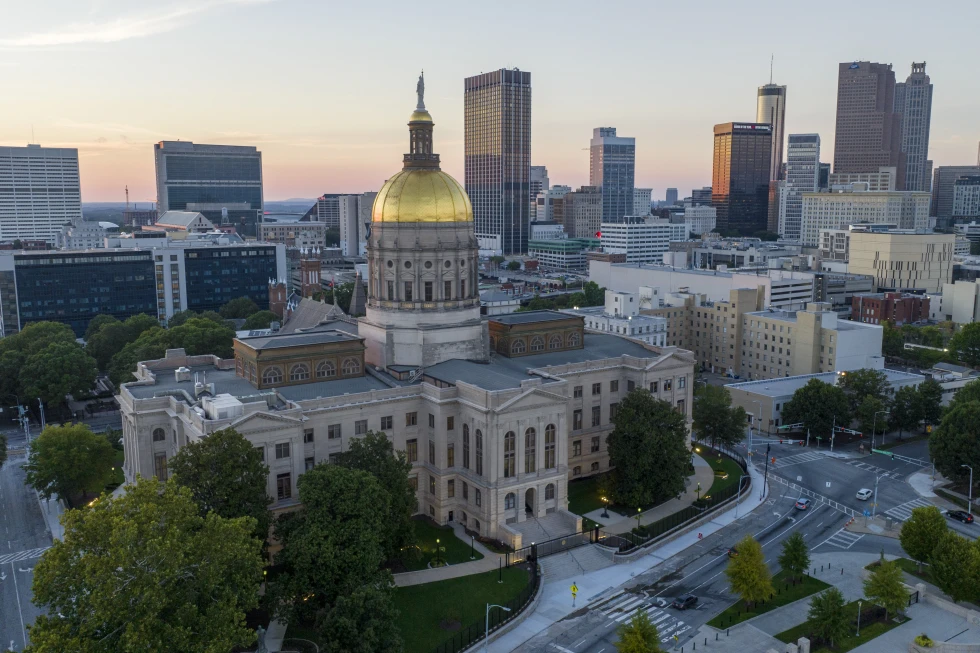
The Georgia State Capitol in Atlanta is one of the city’s most iconic landmarks, crowned by its distinctive gold dome. Its story begins in 1868, when Atlanta was designated as the new state capital following a statewide referendum. Initially, Georgia’s government operated out of the Atlanta City Hall and Fulton County Courthouse, but overcrowding quickly made this arrangement impractical. The state then moved into the unfinished Kimball Opera House, which served as the capitol for two decades.
In 1877, Atlanta’s status as the capital was reaffirmed by voters, and the city committed to providing land and funding for a new capitol building. Construction began in 1883 after the legislature allocated $1 million, stipulating that the building should be made primarily of Georgia materials. The design, chosen from a national competition, was submitted by the Chicago firm Edbrooke and Burnham and reflected a classic Renaissance style—simple, elegant, and monumental. Although Indiana limestone was used for much of the exterior, Georgia marble and granite were prominently featured, including the cornerstone and interior floors. The capitol was completed in 1889, two months behind schedule, and officially dedicated on July 4 of that year. The building housed the offices of the governor, legislature, Supreme Court, and various state agencies, though it was already half-full by the time of its opening, foreshadowing the need for future expansions.
Architecturally, the Georgia State Capitol stands out with its Renaissance Revival style, a departure from the Georgian and Gothic designs of previous state capitols. At the time of its construction, it was the tallest building in Atlanta, rising over 272 feet. The dome, originally covered in tin, was later gilded with gold leaf from Dahlonega, Georgia, during a 1958 renovation—a project funded by citizens and symbolizing the state’s gold rush history. The statue atop the dome, known as “Miss Freedom,” holds a torch and sword, representing liberty and justice. Over the years, the dome has been regilded several times, most recently in the 1980s, to maintain its lustrous appearance.
The capitol’s growth mirrored the expansion of state government. By the 1930s and 1940s, new buildings were added to the capitol complex to accommodate the increasing number of state agencies. Today, the complex includes multiple office buildings and facilities, forming the administrative heart of Georgia’s government. The capitol remains a symbol of the state’s history, resilience, and commitment to public service, blending historical significance with ongoing governmental function.